Tooth pain can become extremely uncomfortable, especially when it starts affecting your ability to eat, sleep, or perform daily activities. In many cases, severe pain is not just a simple cavity issue but a sign that infection has reached the inner layer of the tooth.
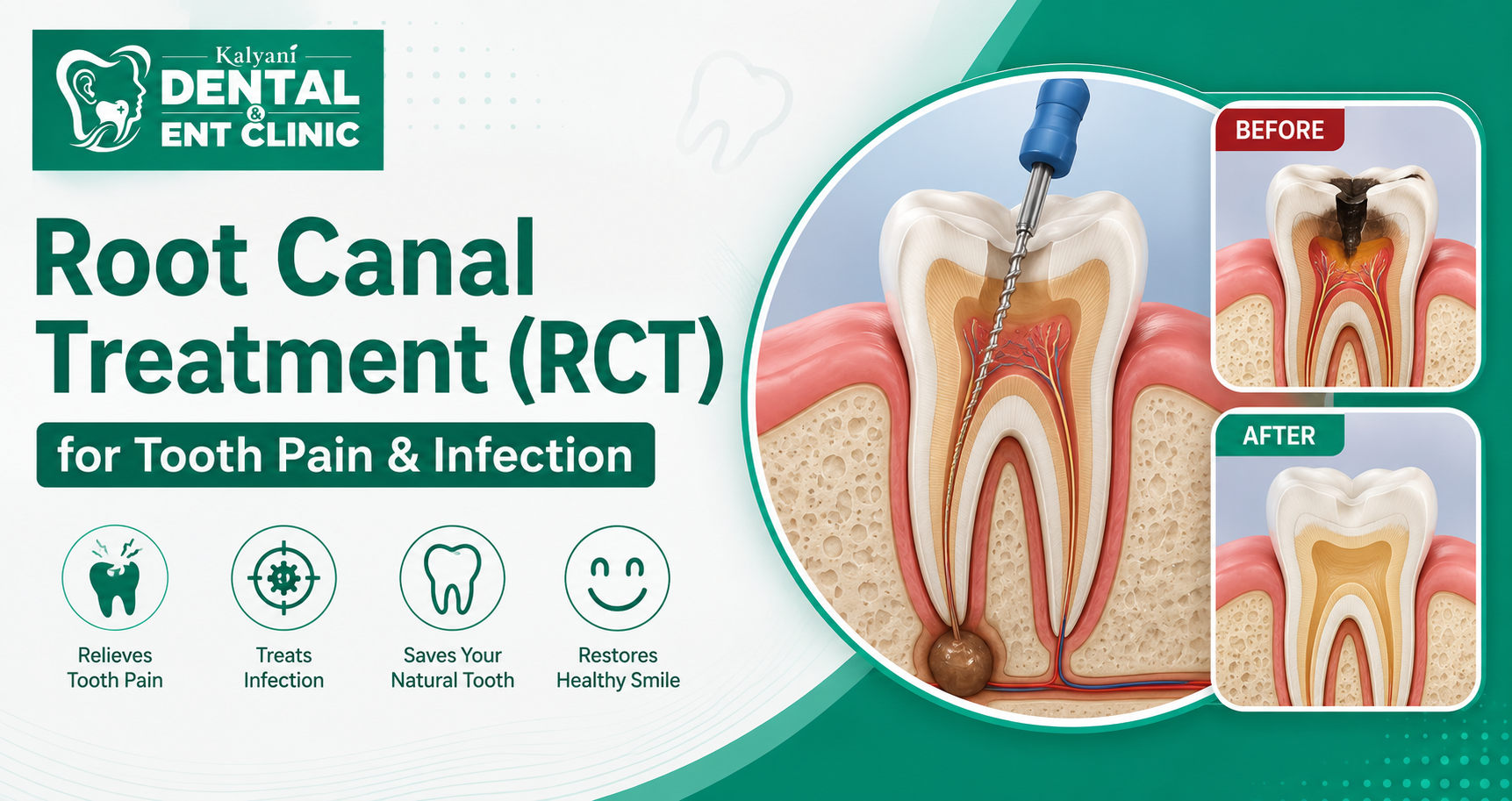
When the soft inner tissue of a tooth, known as the dental pulp, becomes infected or damaged, Root Canal Treatment (RCT) is often recommended to remove the infection and preserve the natural tooth.
Many people still feel nervous when they hear the term “root canal,” but advancements in dental technology have made the procedure much safer, faster, and more comfortable than before.
At Kalyani Dental Clinic, root canal treatment is performed with modern techniques to relieve pain, control infection, and restore your tooth’s normal function.
What is Root Canal Treatment?
A root canal is a dental procedure that treats infection or inflammation inside a tooth. Every tooth has a hollow space containing nerves, blood vessels, and soft tissues called pulp. This pulp helps the tooth develop during childhood but is not essential for the tooth to function after it matures.
When bacteria enter this inner area due to decay, cracks, or injury, infection can occur. If left untreated, the infection may spread to surrounding tissues and cause swelling or even tooth loss.
During RCT, the dentist:
- Removes the infected pulp tissue
- Cleans and disinfects the root canals
- Fills the empty space with a safe sealing material
- Restores the tooth to protect it from future damage
The main purpose of root canal treatment is to save your natural tooth instead of removing it.
When Do You Need Root Canal Treatment?
Not every toothache requires RCT, but certain symptoms indicate that the infection may have reached deeper layers of the tooth.
You may need root canal treatment if you experience:
Persistent Tooth Pain
A continuous or severe toothache, especially while biting or chewing, can indicate damage to the tooth pulp.
Long-Lasting Sensitivity
If your tooth remains sensitive to hot or cold foods even after removing the trigger, it may require further evaluation.
Swollen or Tender Gums
Infection inside the tooth can create swelling, tenderness, or a small bump on the gum near the affected tooth.
Tooth Discoloration
A darkened or greyish tooth may suggest damage to the internal tissues.
Deep Tooth Decay
When cavities become advanced and reach the pulp chamber, root canal treatment may be required.
What Causes Tooth Infection Requiring RCT?
Several dental problems can allow bacteria to enter the inner part of a tooth.
Common causes include:
- Untreated dental cavities
- Cracked or broken teeth
- Dental injuries
- Multiple procedures on the same tooth
- Worn-out fillings
- Advanced tooth decay
Maintaining regular dental check-ups can help identify these problems before they become severe.
How is Root Canal Treatment Done?
Many patients feel anxious because they are unsure about the procedure. Knowing the steps can help you feel more prepared.
Step 1: Dental Examination and X-Ray
The dentist first checks the affected tooth and uses X-rays to understand the level of infection and root structure.
Step 2: Local Anaesthesia
The area around the tooth is numbed to ensure a comfortable treatment experience.
Step 3: Removing the Infected Tissue
A small opening is made in the tooth, allowing the dentist to remove the infected pulp and damaged tissues.
Step 4: Cleaning the Root Canals
Special dental instruments are used to clean and shape the canals while removing bacteria and infection.
Step 5: Filling and Sealing
The cleaned canals are filled with a biocompatible material to prevent bacteria from entering again.
Step 6: Tooth Restoration
A filling or dental crown is placed to strengthen the tooth and restore its appearance and function.
Is It Good to Do Root Canal Treatment?
Yes, root canal treatment is considered one of the most effective methods to save an infected tooth.
Many patients benefit from RCT because it:
- Prevents unnecessary tooth removal
- Stops infection from spreading
- Reduces severe tooth pain
- Maintains natural chewing ability
- Helps preserve your smile
Removing a tooth may seem like a quick solution, but replacing it later with an implant or bridge can require additional procedures. Whenever possible, saving your natural tooth is usually the preferred dental approach.
What is the Recovery Time for a Root Canal?
Recovery after a root canal is generally quick. Most patients can return to their regular routine shortly after treatment.
Typical Recovery Timeline:
- First 24–48 hours: Mild soreness or sensitivity may occur.
- Within a few days: Discomfort usually decreases.
- Around one week: Most patients feel completely normal.
To support healing:
- Avoid chewing hard foods on the treated side initially.
- Follow your dentist’s instructions carefully.
- Maintain regular brushing and flossing.
- Complete the recommended restoration, such as a crown, if advised.
What is the Downside of a Root Canal?
Root canal treatment has a high success rate, but like any dental procedure, it may have some limitations.
Possible disadvantages include:
Temporary Discomfort
Some patients experience mild pain or sensitivity after treatment, which usually improves within a few days.
Tooth Weakness
A tooth that has undergone RCT may become more fragile, especially if it does not receive proper protection with a crown.
Multiple Visits
Complex cases may require more than one appointment.
Possibility of Future Problems
Although rare, infection can return if the tooth develops new decay, cracks, or problems with the restoration.
Choosing an experienced dentist and maintaining proper oral hygiene can greatly reduce these risks.
Root Canal Treatment vs Tooth Extraction: Which is Better?
Many patients wonder whether removing the tooth is easier than undergoing RCT.
| Root Canal Treatment | Tooth Extraction |
|---|---|
| Preserves natural tooth | Removes the tooth completely |
| Maintains normal bite | May affect bite balance |
| Prevents shifting of nearby teeth | May require replacement |
| Supports natural appearance | Needs additional restoration |
Dentists usually recommend saving a natural tooth whenever it is possible and healthy enough to restore.
How Long Does a Root Canal Treated Tooth Last?
A tooth treated with RCT can last many years with proper care. The durability depends on:
- Quality of the treatment
- Placement of a protective crown when needed
- Daily oral hygiene habits
- Regular dental check-ups
A restored tooth should be cared for like any other natural tooth.
Common Myths About Root Canal Treatment
Myth: Root Canal Treatment is Painful
Reality: With modern anaesthesia and techniques, most patients experience minimal discomfort during the procedure.
Myth: Extraction is Always a Better Option
Reality: Keeping your natural tooth usually provides better function and appearance.
Myth: A Root Canal Means the Tooth is Dead
Reality: The infected pulp is removed, but the tooth continues to function normally.
FAQs:
With proper anaesthesia, the procedure is usually comfortable. Some mild soreness may occur after treatment.
How many days does a root canal take?
Depending on the condition of the tooth, treatment may be completed in one or multiple visits.
Can I avoid root canal treatment?
If the tooth pulp is infected, delaying treatment may worsen the infection and increase the chances of tooth damage.
Is a crown required after root canal?
In many cases, especially back teeth, a crown is recommended to protect the tooth from breaking.
What happens if an infected tooth is left untreated?
The infection can spread to surrounding tissues, causing swelling, abscess formation, and possible tooth loss.
Why Choose Kalyani Dental Clinic for Root Canal Treatment?
At Kalyani Dental Clinic, we understand that tooth pain can be stressful. Our focus is to provide comfortable, precise, and patient-friendly dental care using advanced treatment methods.
Our root canal services include:
- Accurate diagnosis
- Modern dental equipment
- Infection control procedures
- Comfortable treatment experience
- Personalized aftercare guidance
Whether you have severe tooth pain, sensitivity, or signs of infection, timely dental consultation can help protect your tooth and prevent future complications.
Final Thoughts
Root canal treatment is a reliable solution for saving a damaged or infected tooth while relieving pain and restoring normal function. Ignoring tooth infection may lead to bigger dental problems, but early treatment can protect your oral health.
If you are experiencing continuous tooth pain, swelling, or sensitivity, consult Kalyani Dental Clinic for professional evaluation and effective root canal treatment. A timely decision can help you maintain a healthy, natural smile for years.
Read More: