A missing tooth affects more than your appearance. It can make everyday activities like eating, speaking, and smiling feel uncomfortable. Over time, the surrounding teeth may shift, your bite can become uneven, and your jaw may experience additional stress.
This is why many patients choose a dental bridge—a reliable restoration that fills the gap and brings back both function and confidence. If you’ve searched for bridge teeth before and after, you’re probably curious about the visible improvements, treatment process, and long-term results.
This guide explains everything you should know before deciding on a dental bridge, from how your smile changes to the advantages, possible drawbacks, and maintenance tips.
What Is a Dental Bridge?
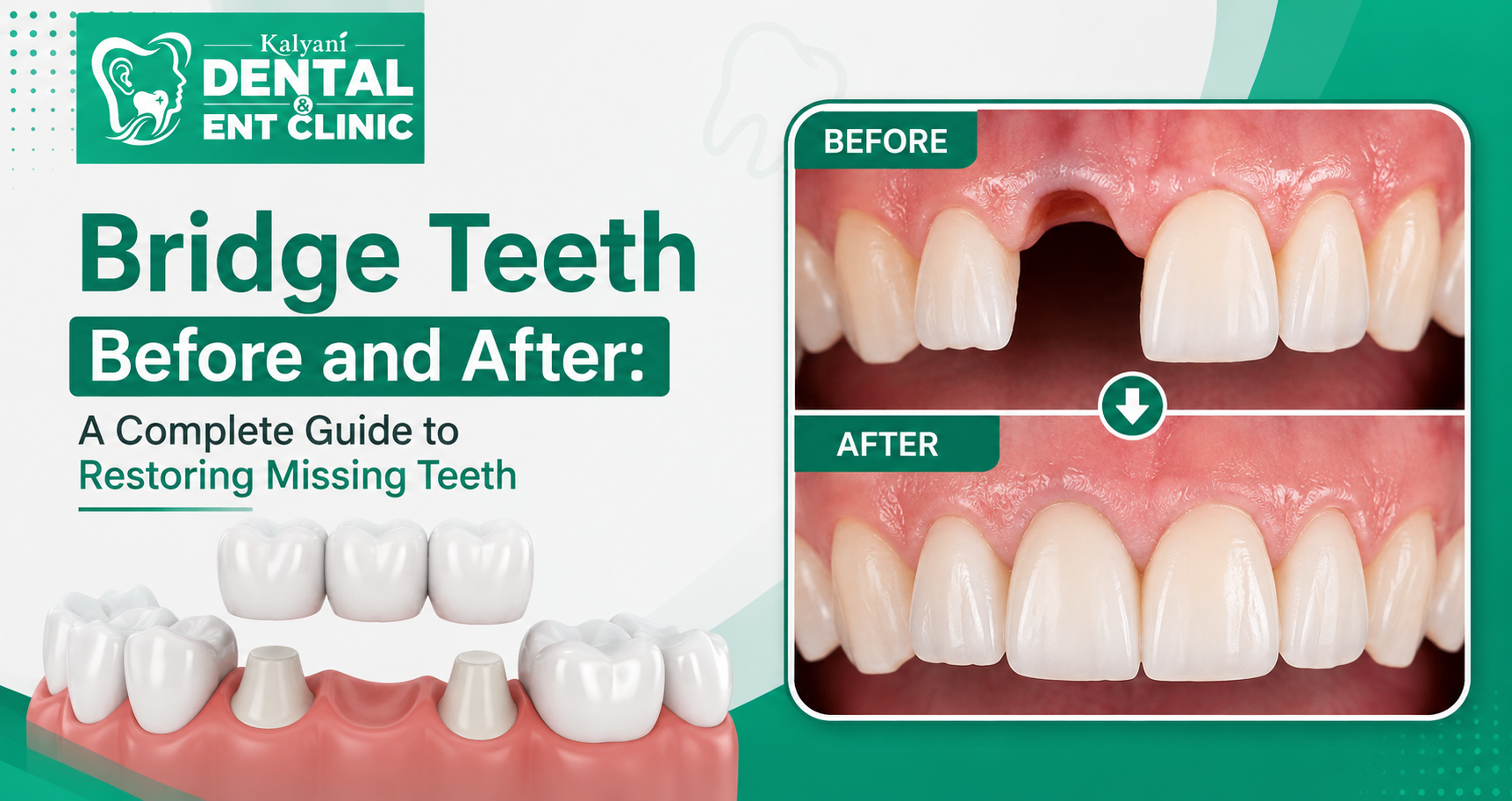
A dental bridge is a fixed prosthetic designed to replace one or more missing teeth. It consists of an artificial tooth supported by crowns placed on the neighbouring teeth or by dental implants, depending on your treatment plan.
The goal is not only to restore your smile but also to maintain proper chewing function and prevent nearby teeth from moving into the empty space.
Modern bridges are custom-crafted to resemble natural teeth, making them difficult to distinguish from the rest of your smile.
Bridge Teeth Before and After: The Difference You Can See and Feel
Replacing a missing tooth changes both appearance and oral function. While every patient is different, most notice significant improvements after treatment.
Before Treatment
People with missing teeth often experience:
- A visible gap in the smile
- Difficulty biting into certain foods
- Food getting trapped in the empty space
- Changes in speech
- Lower self-confidence
- Teeth drifting out of alignment
- Extra pressure on surrounding teeth
Ignoring missing teeth may also contribute to long-term bite problems.
After Treatment
Once the bridge is fitted, patients commonly experience:
A Balanced Smile
The gap is replaced with a natural-looking tooth that blends with existing teeth.
Better Chewing Ability
Foods that were previously difficult to eat become easier to chew comfortably.
Improved Speech
Replacing missing front teeth often makes pronunciation clearer.
Greater Confidence
Many patients smile more freely in social and professional settings after treatment.
Better Bite Stability
The bridge helps distribute chewing forces evenly, reducing unnecessary stress on nearby teeth.
Who Can Benefit from a Dental Bridge?
A dental bridge may be recommended if you:
- Have one or several missing teeth
- Have healthy teeth on either side of the gap
- Want a fixed restoration
- Maintain good oral hygiene
- Have healthy gums
Your dentist will assess your oral health and discuss whether a bridge is the most suitable option.
How Is a Dental Bridge Placed?
The procedure is typically completed over two or three visits.
Initial Consultation
The dentist examines your teeth, gums, and bite using clinical evaluation and digital imaging.
Tooth Preparation
Supporting teeth are reshaped so that crowns can fit comfortably.
Impression or Digital Scan
Accurate measurements are taken to fabricate a bridge that matches your bite and natural teeth.
Temporary Restoration
A temporary bridge protects prepared teeth until the permanent one is ready.
Final Placement
The permanent bridge is adjusted for comfort and securely fixed into place.
Once completed, patients can usually return to normal daily activities quickly.
Benefits of Choosing a Dental Bridge
Dental bridges continue to be one of the most popular restorative treatments because they offer several practical advantages.
Restores Your Smile Naturally
Modern materials closely imitate the appearance of natural enamel.
Makes Eating Comfortable Again
Chewing becomes more efficient after missing teeth are replaced.
Protects Remaining Teeth
Bridges help prevent neighbouring teeth from drifting into empty spaces.
Fixed and Stable
Unlike removable dentures, bridges stay securely in place.
Faster Than Some Alternatives
Treatment is generally completed in just a few appointments.
Supports Facial Appearance
Replacing missing teeth helps maintain the natural shape of your smile.
What Are the Disadvantages of Bridge Teeth?
Although bridges are highly effective, it’s important to understand their limitations.
- Supporting teeth usually require preparation.
- Cleaning underneath the bridge takes extra effort.
- Bridges cannot stop bone loss beneath the missing tooth like implants can.
- They may eventually need replacement after years of use.
- Poor oral hygiene can affect the supporting teeth.
These concerns can often be managed with regular dental care and proper cleaning techniques.
How Long Does a Tooth Bridge Last?
A common concern among patients is durability.
Most dental bridges remain functional for 10 to 15 years, while many continue performing well for two decades or longer with proper care.
Several factors influence longevity, including:
- Daily brushing and flossing
- Gum health
- Regular dental visits
- Quality of the restoration
- Avoiding habits such as biting hard objects or grinding teeth
Consistent maintenance plays a major role in extending the life of a dental bridge.
Is a Bridge a Good Idea for Teeth?
For many patients, the answer is yes.
A dental bridge is an excellent solution when:
- One or more teeth are missing
- Adjacent teeth are healthy
- You prefer a non-removable replacement
- You want to restore chewing efficiency
- You’re looking for a treatment that combines function with aesthetics
However, every smile is unique. Your dentist will compare bridges with implants or dentures before recommending the best option.
Caring for Your Dental Bridge
A bridge requires the same attention as natural teeth.
Good habits include:
- Brush twice every day.
- Clean under the bridge using floss threaders or interdental brushes.
- Attend routine dental check-ups.
- Reduce sugary snacks and beverages.
- Avoid using your teeth to open packages.
- Wear a night guard if you grind your teeth while sleeping.
Simple preventive care helps your bridge stay comfortable and functional for many years.
FAQs:
Does a dental bridge look natural?
Yes. Today’s ceramic and zirconia bridges are colour-matched to neighbouring teeth, creating a seamless appearance.
Can I eat normally after getting a bridge?
After a short adjustment period, most patients return to enjoying a wide variety of foods.
Is getting a bridge painful?
The procedure is performed under local anaesthesia, making treatment comfortable. Mild sensitivity after placement is usually temporary.
Which lasts longer: a bridge or an implant?
Dental implants generally last longer because they replace the tooth root. However, bridges remain an excellent long-term solution for many patients and involve a shorter treatment timeline.
Why Patients Trust Kalyani Dental Clinic?
At Kalyani Dental Clinic, every smile restoration begins with a detailed assessment and personalised treatment plan. Our team uses advanced diagnostic techniques and high-quality materials to design bridges that feel comfortable, function efficiently, and blend naturally with your existing teeth.
From consultation to aftercare, we focus on restoring your confidence while preserving your long-term oral health.
Final Thoughts
Looking at bridge teeth before and after results clearly shows how replacing missing teeth can improve both appearance and daily comfort. Beyond filling a gap, a well-crafted dental bridge restores chewing ability, enhances speech, and supports a healthier bite.
If you have one or more missing teeth, seeking professional advice early can help prevent future dental complications and provide a long-lasting solution tailored to your needs.
CTA:
Ready to rebuild your smile with confidence? Book your consultation at Kalyani Dental Clinic today. Our experienced dental team will evaluate your oral health, explain your treatment options, and create a customised dental bridge that restores both function and aesthetics naturally.
Read More: