A straight smile is often associated with confidence, but teeth braces offer far more than cosmetic improvement. They play an important role in correcting bite problems, improving oral hygiene, protecting teeth from uneven wear, and supporting long-term dental health. Whether you’re a teenager beginning orthodontic treatment or an adult considering braces for the first time, it’s natural to wonder: Are teeth braces really worth it?
This guide explores the advantages, limitations, and lasting benefits of braces so you can make an informed decision about your smile.
Why Are Teeth Braces Recommended?
Teeth braces are orthodontic appliances designed to gradually move teeth into their ideal positions using gentle, controlled pressure. While many people choose braces to improve their smile, orthodontists also recommend them to correct functional issues that may affect chewing, speech, and oral health.
Braces are commonly used to treat:
- Crooked or crowded teeth
- Gaps between teeth
- Overbite
- Underbite
- Crossbite
- Open bite
- Jaw alignment problems
Correcting these issues not only enhances appearance but also reduces the risk of future dental complications.
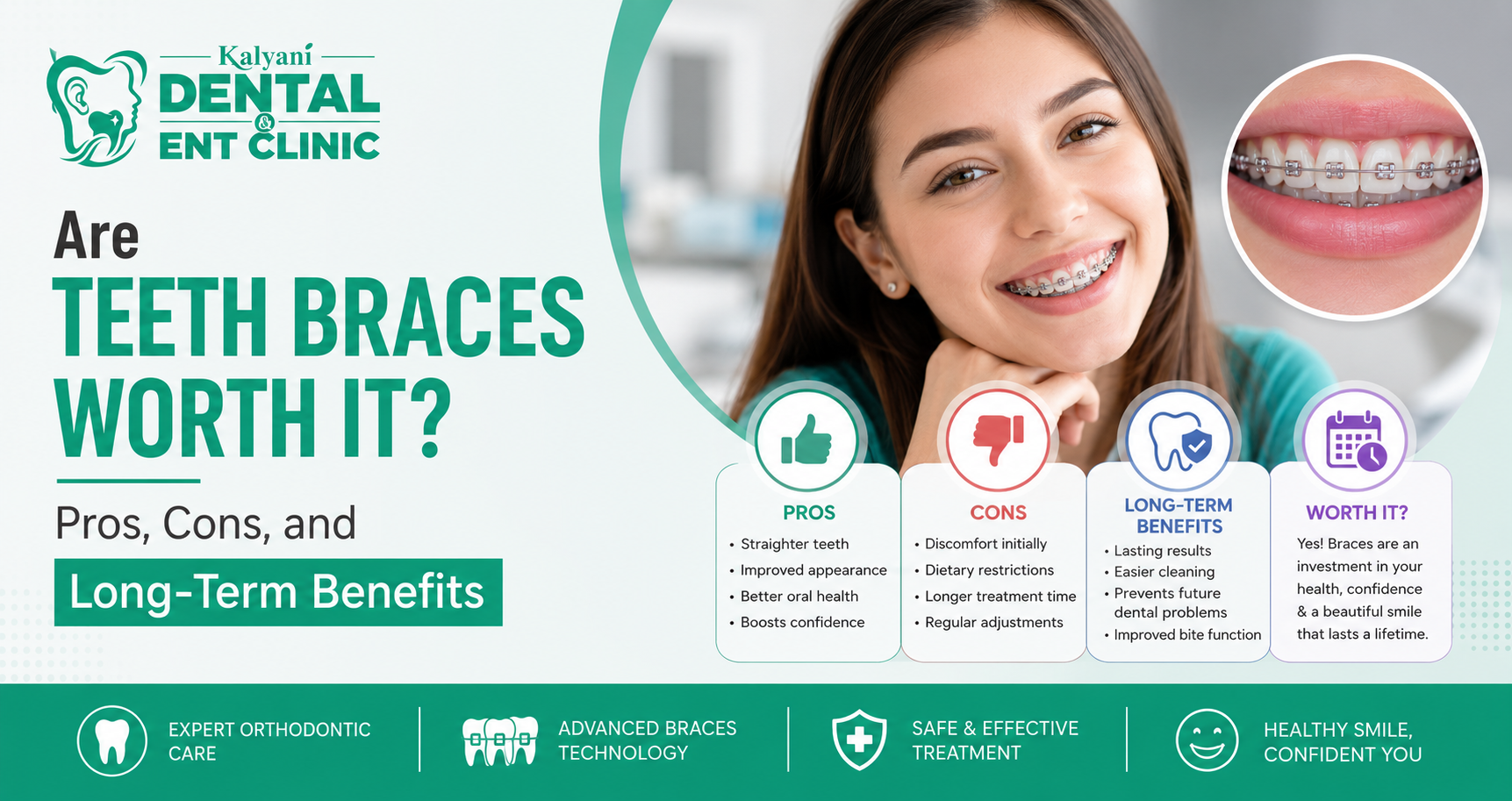
Are Teeth Braces Worth It?
For most patients, the answer is yes. Braces are an investment in your oral health that can provide benefits for decades.
Unlike cosmetic treatments that focus only on appearance, braces improve the way your teeth and jaws function together. Proper alignment makes daily activities such as chewing, brushing, flossing, and speaking more comfortable and efficient.
The results often continue benefiting patients long after treatment is complete, especially when retainers are worn as recommended.
Benefits of Teeth Braces Beyond a Better Smile
1. Improved Oral Hygiene
Crowded or overlapping teeth create spaces where food particles and plaque become trapped.
Straight teeth are much easier to clean, helping reduce the risk of:
- Tooth decay
- Gum disease
- Bad breath
- Plaque buildup
Better cleaning means healthier teeth throughout life.
2. Better Bite Function
An uneven bite can make chewing difficult and place excessive pressure on certain teeth.
Orthodontic treatment distributes biting forces more evenly, making eating more comfortable and reducing unnecessary strain on the jaw.
3. Reduced Tooth Wear
Misaligned teeth often rub against each other unevenly.
Over time, this can lead to:
- Chipped enamel
- Tooth fractures
- Increased sensitivity
- Premature wear
Braces help create balanced contact between teeth, protecting them from excessive damage.
4. Increased Confidence
Many patients report improved confidence after completing orthodontic treatment.
Feeling comfortable smiling during conversations, photographs, interviews, and social events often has a positive impact on both personal and professional life.
5. Long-Term Oral Health
Proper alignment helps reduce future dental problems that may require expensive restorative procedures.
Braces can contribute to healthier gums, stronger teeth, and improved jaw function for many years.
Are Braces Worth It Long Term?
This is one of the most frequently searched questions online.
The long-term value of braces extends well beyond straight teeth.
Patients who maintain good oral hygiene and wear their retainers often enjoy lasting improvements such as:
- Better chewing efficiency
- Reduced gum problems
- Lower risk of tooth wear
- Improved bite stability
- Easier dental cleaning
- Enhanced facial balance
Rather than being a temporary cosmetic treatment, braces often provide lifelong functional benefits.
Do Braces Have Long-Term Effects?
Yes—but in most cases, these effects are positive.
Successful orthodontic treatment can improve:
- Bite alignment
- Jaw function
- Tooth positioning
- Smile symmetry
- Overall oral health
However, maintaining results requires commitment.
After braces are removed, patients usually need to wear retainers to prevent teeth from gradually shifting back toward their original positions.
Following your orthodontist’s instructions is essential for preserving your new smile.
Understanding the Disadvantages of Teeth Braces
Every dental treatment has certain limitations, and braces are no exception.
Understanding these challenges helps patients prepare for treatment.
Temporary Discomfort
Mild soreness is common during the first few days after braces are placed or adjusted.
This discomfort usually disappears within a short period as the teeth begin adapting.
Longer Treatment Duration
Orthodontic treatment requires patience.
Depending on the complexity of the case, braces may need to be worn for 12 to 24 months, or sometimes longer.
Regular follow-up visits are necessary throughout treatment.
Extra Oral Hygiene Effort
Brackets and wires create additional areas where food particles may accumulate.
Patients must spend more time brushing and flossing carefully to prevent cavities and gum inflammation.
Food Restrictions
Certain foods should be avoided while wearing braces, including:
- Sticky sweets
- Hard candies
- Popcorn kernels
- Ice cubes
- Hard nuts
- Chewy foods
These precautions help prevent damage to brackets and wires.
Initial Speech Changes
Some patients notice slight speech adjustments immediately after getting braces.
These changes are temporary and usually disappear as the mouth adapts.
Are There Permanent Side Effects of Braces?
One concern patients often have is whether braces can cause permanent damage.
When treatment is planned and monitored by a qualified orthodontist, permanent side effects are uncommon.
However, problems may occur if patients neglect oral hygiene or fail to follow professional instructions.
Potential risks include:
- White spots caused by poor brushing
- Gum inflammation
- Minor root shortening in some cases
- Tooth movement if retainers are not worn
- Decalcification around brackets
These complications are generally preventable with proper care, regular dental visits, and good oral hygiene practices.
How to Reduce the Risks During Braces Treatment
Patients can protect their teeth throughout orthodontic treatment by following a few simple habits:
- Brush after every meal.
- Floss daily using orthodontic floss or floss threaders.
- Attend all scheduled adjustment appointments.
- Avoid damaging foods.
- Wear retainers after treatment.
- Visit your dentist for routine professional cleanings.
Consistent care helps ensure excellent long-term results.
Who Is a Good Candidate for Teeth Braces?
Braces may be suitable for:
- Children with developing bite problems
- Teenagers with crowded or crooked teeth
- Adults seeking smile improvement
- Patients experiencing jaw alignment issues
- Individuals with spacing problems
Age is not necessarily a barrier. Many adults now choose orthodontic treatment to improve both appearance and oral function.
FAQs:
Are braces worth it long term?
Yes. Braces improve tooth alignment, bite function, oral hygiene, and smile confidence. With proper retention, the benefits can last for many years.
Do braces have long-term effects?
Most long-term effects are positive, including improved chewing, healthier gums, reduced tooth wear, and better oral function. Wearing retainers helps maintain these results.
What are the disadvantages of teeth braces?
Treatment requires patience, regular appointments, careful cleaning, temporary dietary restrictions, and occasional discomfort during adjustments.
Are there permanent side effects of braces?
Permanent complications are uncommon when braces are managed by an experienced orthodontist. Good oral hygiene and following treatment instructions significantly reduce potential risks.
How long do braces usually stay on?
Most patients wear braces for 12–24 months, depending on the complexity of their orthodontic needs.
The Bottom Line: Are Teeth Braces Worth the Investment?
Straightening your teeth is about more than achieving a beautiful smile. Properly aligned teeth are easier to clean, function more efficiently, and are less likely to develop problems caused by uneven wear or poor bite alignment. While braces require time, commitment, and regular care, their long-term benefits often outweigh the temporary inconveniences.
At Kalyani Dental & ENT Clinic, we believe every patient deserves a treatment plan tailored to their unique smile. Our experienced dental professionals carefully evaluate your oral health, discuss your goals, and recommend the most appropriate orthodontic solution to help you achieve healthy, lasting results.
If you’re considering teeth braces and want expert guidance, book a consultation with Kalyani Dental & ENT Clinic today. Your journey toward a healthier, more confident smile can begin with a single visit.
Read More: